Oil prices climb as Middle East supply risks outweigh glut fears
 ITF Team2 min read
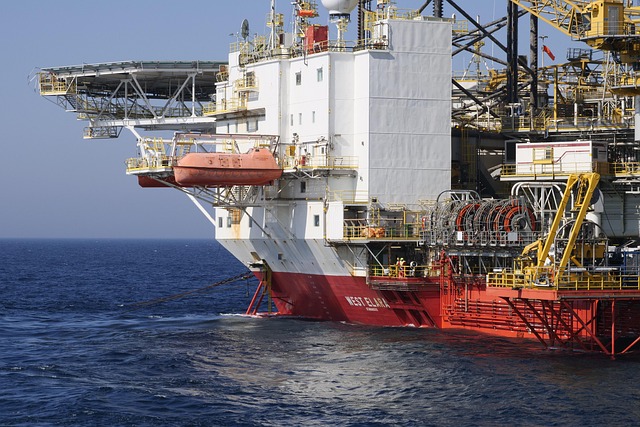
Oil prices rose to $96.61 for Brent and $85.79 for WTI on 11/27/2026 as tanker attacks in the Strait of Hormuz and lower Middle East export data revived supply concerns.
Key takeaways
- Brent crude was $96.61 per barrel and WTI $85.79 per barrel on 27 November 2026.
- Tanker attacks in the Strait of Hormuz and recent Houthi strikes on Saudi facilities renewed supply‑risk concerns.
- IEA data showed Middle‑East energy exports were below pre‑war levels, contradicting earlier glut expectations.
- Analysts said Brent could push above $100/bbl if supply constraints become clearer.
Crude oil prices turned higher on 27 November 2026, with Brent trading at $96.61 a barrel and West Texas Intermediate at $85.79. The bounce came after a string of losses, as fresh reports of tanker attacks in the Strait of Hormuz and recent Houthi strikes on Saudi energy sites revived worries about a supply shortfall.
Supply‑risk narrative re‑emerges
In recent weeks, market commentary had shifted toward an expected glut, driven by the International Energy Agency’s assumption that export volumes would stay elevated despite the lack of a US‑Iran peace deal. New data, however, showed that oil flows from the Middle East were falling short of September‑October peaks, and LNG exports were only about half of pre‑war levels. This mismatch between expectations and reality pushed traders to reassess the supply outlook.
Analysts at ING highlighted that attacks on Saudi infrastructure, including the Ras Tanura hub and Red Sea ports, together with reported vessel targeting in Hormuz, have put supply risks back in focus. The ANZ commodity team added that Brent could still breach the $100 mark without a further major escalation, provided the market sees clear evidence of constrained deliverable supply.
Geopolitical triggers and market reaction
The Strait of Hormuz, a chokepoint for roughly 20% of global oil shipments, saw an uptick in tanker traffic despite intensified attacks, according to a 13‑hour‑old report. Recent Houthi actions, such as the mine explosion on an Iranian LNG carrier and strikes on Saudi facilities, have heightened uncertainty about the continuity of flows through the narrow waterway.
These developments coincided with the weekend OPEC+ meeting, where participants are expected to signal whether production will be adjusted to offset the emerging risk premium. Traders are watching the outcome closely, as any indication of tighter output could reinforce the upward move in prices.
Read also: Oil prices slide as Hormuz threats fail to lift market
Price levels and technical context
Both Brent and WTI remain below the October highs that saw Brent touch the $105 level. Nevertheless, the current prices sit near recent support zones, and the weekly gain suggests a reversal from the prior downtrend. Should supply concerns intensify, the next resistance for Brent lies around $100, while WTI’s next hurdle is near $90.
For the week ahead, market participants will monitor further reports from Hormuz, any escalation of Houthi attacks, and the OPEC+ communiqué. A sustained supply shock could push Brent back above $100, whereas a de‑escalation might see prices retreat toward the $90‑$95 range.
- Brent: $96.61/bbl (27 Nov 2026)
- WTI: $85.79/bbl (27 Nov 2026)
- Strait of Hormuz tanker traffic up despite attacks
- IEA: Middle‑East energy exports below pre‑war levels
- OPEC+ meeting scheduled for the weekend
Frequently asked questions
Why did oil prices rise on 27 November 2026?
Prices rose because fresh reports of tanker attacks in the Strait of Hormuz and recent Houthi strikes on Saudi energy infrastructure revived supply‑risk concerns, while data showed Middle‑East energy exports were lower than pre‑war levels, contradicting earlier glut expectations.
What levels are traders watching for Brent and WTI?
Traders see Brent resistance near $100 per barrel and support around $95, while WTI’s next resistance is near $90 and support around $85. Both benchmarks are still below the October peaks but are gaining ground from recent lows.
Official data sources
Related news
- Oil prices slide as Hormuz threats fail to lift market
- Brent oil near three‑month low, testing $85.57 support as Libya pipeline restarts
- Oil prices range as surplus forecast clashes with Middle East tensions
- Hormuz oil exports could decline amid inbound tanker shortage
More from ITF
This article is compiled from international market news for information only. It is not investment advice.