Gold price outlook: high real yields pose a risk ahead of US CPI
 ITF Team3 min read
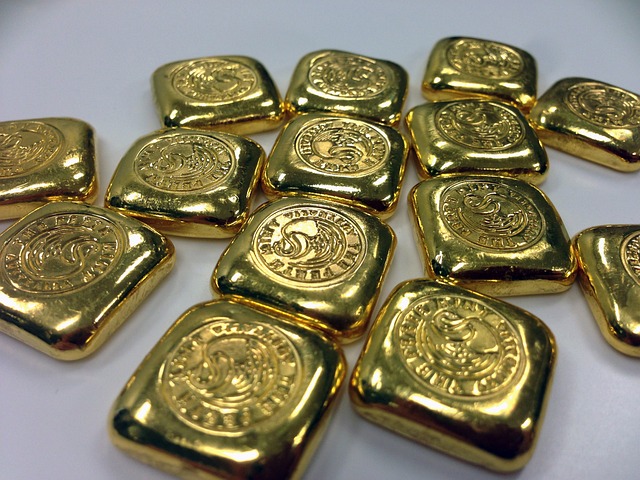
Gold stays near $4,116 as 5‑year real yields sit at 2.35% and 10‑year at 2.63%; analysts warn a break above $4,200 is needed to sustain the rally.
Key takeaways
- Real 5‑year Treasury yield was 2.35% on 11/6/2026, the 10‑year yield 2.63%.
- December 2026 COMEX gold settled at $4,074.90, down $38.60 on 11/9/2026.
- Gold is trading around $4,116.32, up 1.12% on 11/9/2026.
- A close above $4,200 could trigger the next upward leg, according to technical analysis.
Gold opened the week at $4,116.32 on 9 Nov 2026, up 1.12% despite a clash between two opposing forces. Elevated U.S. real yields raise the opportunity cost of holding a non‑yielding asset, while lingering geopolitical tension and inflation uncertainty keep the metal’s nominal value high.
Real‑rate backdrop remains restrictive
U.S. Treasury data showed the 5‑year real yield at 2.35% and the 10‑year at 2.63% as of 6 Nov 2026. The 30‑year real yield stood at 3.07%, creating an upward‑sloping curve that signals investors demand more inflation‑adjusted return for longer maturities. For gold, higher real yields increase the financing cost of a defensive position because the metal provides no income.
The yields have been confined to a narrow band over the past week—2.31‑2.39% for the 5‑year and 2.60‑2.65% for the 10‑year—yet they remain well above historic lows. A decline limited to the short end would offer modest relief, while a broad fall across the curve would be more supportive. Conversely, a renewed rise in long‑dated real yields could pressure gold even if short‑term policy expectations stay steady.
Labor market data adds a policy dimension
The Bureau of Labor Statistics reported on 8 Nov 2026 that non‑farm payrolls grew by 165,000 in October and the unemployment rate held at 4.1%. A still‑robust labor market reduces the urgency for rapid Federal Reserve easing, keeping expectations for higher nominal yields alive. Higher nominal yields tend to lift real yields, reinforcing the cost pressure on gold.
Gold’s price reaction to employment figures is indirect. The market translates stronger payrolls into expectations of a tighter monetary stance, which then pushes Treasury yields higher and the dollar stronger, both of which weigh on gold demand.
Read also: GBP/USD reclaims 1.3400 as Iran war fears ease
Technical picture and key levels
The latest COMEX settlement for December 2026 gold was $4,074.90, down $38.60 from the previous session. On the chart, futures hover near $4,123, below the 50‑day EMA ($4,177) and the 200‑day EMA ($4,280). Support is identified at $4,000, while resistance sits at $4,200, a level that has blocked rallies multiple times this year.
Analyst Christopher Lewis notes that a daily close above $4,200 could launch the next leg higher, but until then the market is effectively range‑bound between $4,200 and $4,000. The $4,108.51 resistance (R1) and $4,069.17 pivot from the Nov 6 session also serve as reference points for short‑term traders.
Upcoming catalyst: October CPI
The next major event is the U.S. Consumer Price Index for October, released on 12 Nov 2026 at 8:30 a.m. EST. A higher‑than‑expected CPI would reinforce gold’s store‑of‑value narrative and could lift nominal yields if markets anticipate a firmer Fed path. A softer print would likely depress both nominal and real yields, weakening the immediate inflation‑hedge demand for gold.
The market’s reaction will depend on which narrative dominates: inflation‑driven demand for safe‑haven metal or yield‑driven opportunity cost. Traders will watch the $4,200 barrier closely; a break could signal that the CPI‑driven narrative is winning.
- Real 5‑yr yield: 2.35% (11/6/2026)
- Real 10‑yr yield: 2.63% (11/6/2026)
- December 2026 COMEX gold: $4,074.90 (11/9/2026)
- Key technical levels: support $4,000, resistance $4,200
Frequently asked questions
Why do high real yields affect gold prices?
Real yields represent the inflation‑adjusted return on Treasury securities. Because gold pays no interest, a higher real yield raises the opportunity cost of holding gold, making it less attractive relative to yield‑bearing assets.
What level must gold break to confirm a new upward move?
Analysts consider a close above $4,200 as the critical threshold. Breaking this resistance could open the path toward the next technical target around $4,280, the 200‑day EMA.
Official data sources
Related news
- GBP/USD reclaims 1.3400 as Iran war fears ease
- Bitcoin slides below $75,000, gold holds above $4,100 as US CPI looms
- Copper price forecast: tight China supply lifts to $6.44
- US dollar stronger ahead of CPI as dollar index climbs above 102
More from ITF
- ITF trading signals for gold and forex
- Copy verified traders with ITF Copy Trading
- This week’s economic calendar
This article is compiled from international market news for information only. It is not investment advice.